
 St Clement's Church of
England Primary School
St Clement's Church of
England Primary SchoolSpirituality
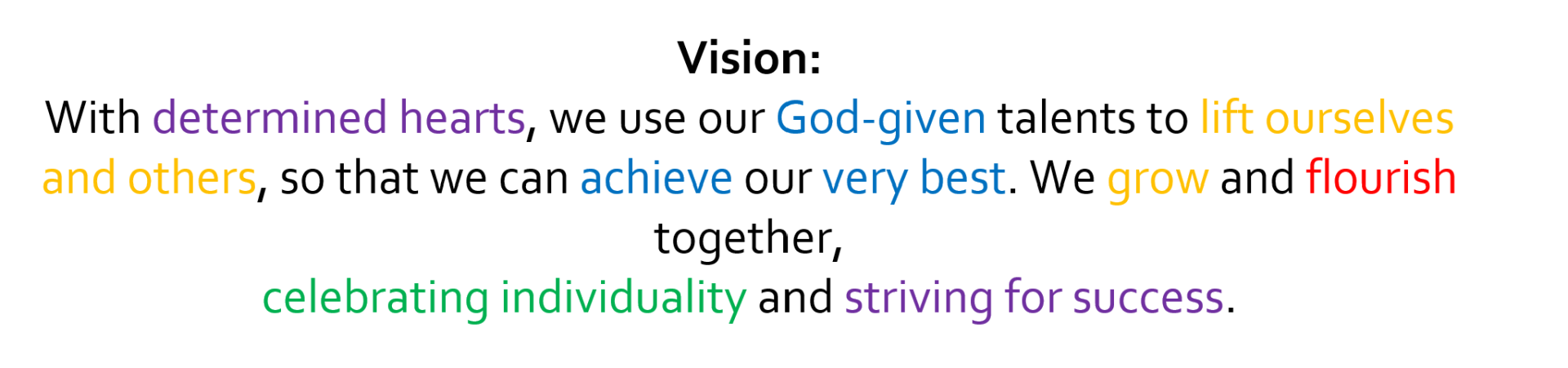
Our School Vision
Luke 1:37 ‘For nothing will be impossible with God’
What is Spiritual Development?
Spiritual development is unique to each individual and is a deeply personal journey, which can make it difficult to put into words. It encompasses a person’s relationship with themselves, with others, with God (or the transcendent), and with the natural world. Spirituality is distinct from religion or faith; a person can be spiritual without adhering to a particular faith tradition.
At St Clement's, in keeping with our Christian vision, we recognise that each of us is created in God’s image and possesses a spiritual dimension. We nurture this dimension through the academic rigour of our teaching and through our commitment to helping children and adults flourish, enabling them to achieve their God-given potential.
The four elements - these consist of:
Self
- Awareness of feelings; ability to reflect and express
- Awareness of our uniqueness; happiness with who we are
- Gratitude for the things we have and the person we are
- Exploration of personal faith
- Development of imagination and creativity.
Others
- Empathy and understanding; respect
- To love and be loved (loving your neighbour)
- Making a difference; duty
Transcendence (Beyond)
- Encountering/experiencing God (having a sense of what lies beyond the material/physical)
- Ability to ask and discuss the 'Big Questions' (e.g. about life, death, suffering, nature of God)
- Opportunities for prayer, connecting with God
- Making sense of the world.
Nature
- Developing a sense of awe and wonder
- Enjoying the miracles of everyday life
- Taking time for what really matters
- Appreciating beauty in art, music, nature.
How we aim to nurture spirituality
Children’s spiritual development at St Clement's is nurtured through every aspect of our provision. We believe it is essential to foster strong relationships guided by our school Vision and Values, alongside developing knowledge, concepts, skills, and attitudes. We provide children with opportunities to:
-
Have regular moments of quiet and reflection throughout the day. This may include listening to a story, lighting candles during worship, listening to music, engaging with the daily reflection, using our reflection areas around school, or participating in prayers said throughout the day.
-
Engage in creativity and imaginative activities, encouraging self-expression and exploration.
-
Sing together in lessons and as part of our weekly worship, fostering joy and community.
-
Explore, express, share, and compare feelings and opinions. This is embedded across the curriculum, with particular focus in PSHE/RSE lessons using the Jigsaw scheme, as well as in worship and RE. Additional approaches such as Restorative Justice, Metacognition, Growth Mindset, Mindfulness, and “I wonder” questions further support this development.
-
Reaffirm the importance of relationships, recognising that how we communicate and relate to one another is fundamental to our community.
-
Experience awe and wonder, appreciating beauty in all its forms and recognising the connections and unity within the world around them.
-
Admit mistakes and apologise. Recognising and taking responsibility for faults is an important process that allows us to learn, heal, and grow. Structures such as Restorative Justice help guide these conversations.
-
Show kindness, care, and compassion, expressing these values in practical ways—through everyday interactions, charitable activities, and use of our prayer spaces.
-
Explore the ‘Big Questions’. This takes place through our RE curriculum, topics, worship, theme weeks, current events, and nurture sessions, encouraging children to think deeply about life and meaning.
-
Read regularly and reflect. Children engage with both secular and religious texts, including the Bible, discussing and reflecting on their meanings.
-
Develop their own system of beliefs, which may or may not include religious faith, encouraging personal understanding and spiritual growth.
-
Reflect on the experiences of others through role play, stories, and discussion, fostering empathy and understanding.
Structures to support and develop spirituality
Opportunities for spiritual development are carefully planned across our curriculum. We have created Big Books of Thoughts, Prayers, and Reflections to capture and celebrate the growing spirituality of our children throughout the school.
Our planned programme for Collective Worship runs throughout the year, with themes based on our School Values and the Diocesan plans. Worship also reflects British Values and is flexible to respond to current world events. Daily acts of Collective Worship take a variety of forms and involve our Worship Leaders, other children, and a range of visitors.
Throughout the school, displays and artwork continually celebrate and encourage reflection and spiritual growth. In addition, visits and visitors are used to enrich and support all aspects of our spiritual provision.
Impact: How do we know this is being effective?
Spiritual development at St Clement’s helps children to love and accept themselves while fostering positive relationships with others. They take an active interest in, and delight in, the world around them and remain open to what lies beyond the material, which may include faith or belief in God. Children learn to express and understand their own feelings while respecting the emotions of others. They develop a strong moral compass and a love for what is good. They enjoy moments of quiet and stillness, nurture an active imagination, and take joy in creativity and the discovery of new skills.
What is the role of the school community?
All members of the school community share the responsibility of nurturing children’s spiritual development.
School staff contribute to this by:
-
Establishing and maintaining strong partnerships between children, parents, and staff, recognising and respecting the faith backgrounds of children and their families.
-
Understanding and considering the needs and backgrounds of each individual child.
-
Being positive role models by living out our School Vision and Values, promoting respect for others, valuing diverse perspectives, and showing care and support within the community.
-
Drawing on children’s and families’ experiences to enrich teaching and learning across the curriculum, including in RE lessons.
-
Developing their own knowledge and understanding of the Christian faith and the faiths of others.
-
Participating in and supporting Collective Worship, demonstrating its importance through active engagement.
-
Maintaining a positive attitude towards spiritual education, recognising its value in fostering growth and wellbeing.
Three ways we provide opportunities for spiritual development:
 WINDOWS: giving the children opportunities to become aware of the world in new ways; to wonder about life’s WOWs (things that are amazing) and Oohs (things that bring us up short). In this, children are learning about life in all its fullness and glory. We provide WINDOWS throughout our curriculum. We have lessons with an awe and wonder focus using a variety of stimuli including photos, videos, music, current events and real-life stories.
 MIRRORS: giving children opportunities to reflect on their experiences; to meditate on life’s big questions and to consider some possible answers. In this they are learning from life by exploring their own insights and perspectives and those of others. MIRRORS throughout high quality RE lessons, children are consistently challenged to reflect on their learning about religion to help them learn from religion, regardless of whether they have a specific faith
 DOORS: We give children opportunities to respond and take action, using creative approaches to express, apply, and develop their thoughts and convictions. In this way, they learn to live out what they believe and value.
At St Clement’s, children are encouraged to identify “DOORS”—issues or opportunities that matter to them, whether local or global. They may respond by fundraising, raising awareness, or taking other meaningful action. This often happens through school council, worship leaders, or other initiatives, but our children also know that their voices are listened to and respected. They gain the confidence to raise issues and concerns independently, knowing that adults in the school will support them.
Children can do this through:
Children contribute to their own spiritual development by:-
-
Respecting the views and beliefs of others, valuing diversity and different perspectives.
-
Using our School Vision and Values to guide themselves and support others in their learning.
-
Actively participating in Collective Worship, engaging with the spiritual life of the school.
-
Being active learners in all lessons, developing the knowledge, skills, and attitudes needed to fulfil their God-given potential.
-
Engaging in learning that encourages reflection on a range of religious beliefs and practices, fostering understanding and personal growth.
-
Parents and Governors can help through:
Children further support their spiritual development by:
-
Adopting a positive attitude toward the value of spiritual education.
-
Supporting the school’s Christian ethos and actively participating in acts of community worship.
-
Respecting the views and beliefs of others, and modelling this respect in their interactions.
St Clement's Spirituality Policy